TECHNICAL BRIEF
PROJECT INTRODUCTION
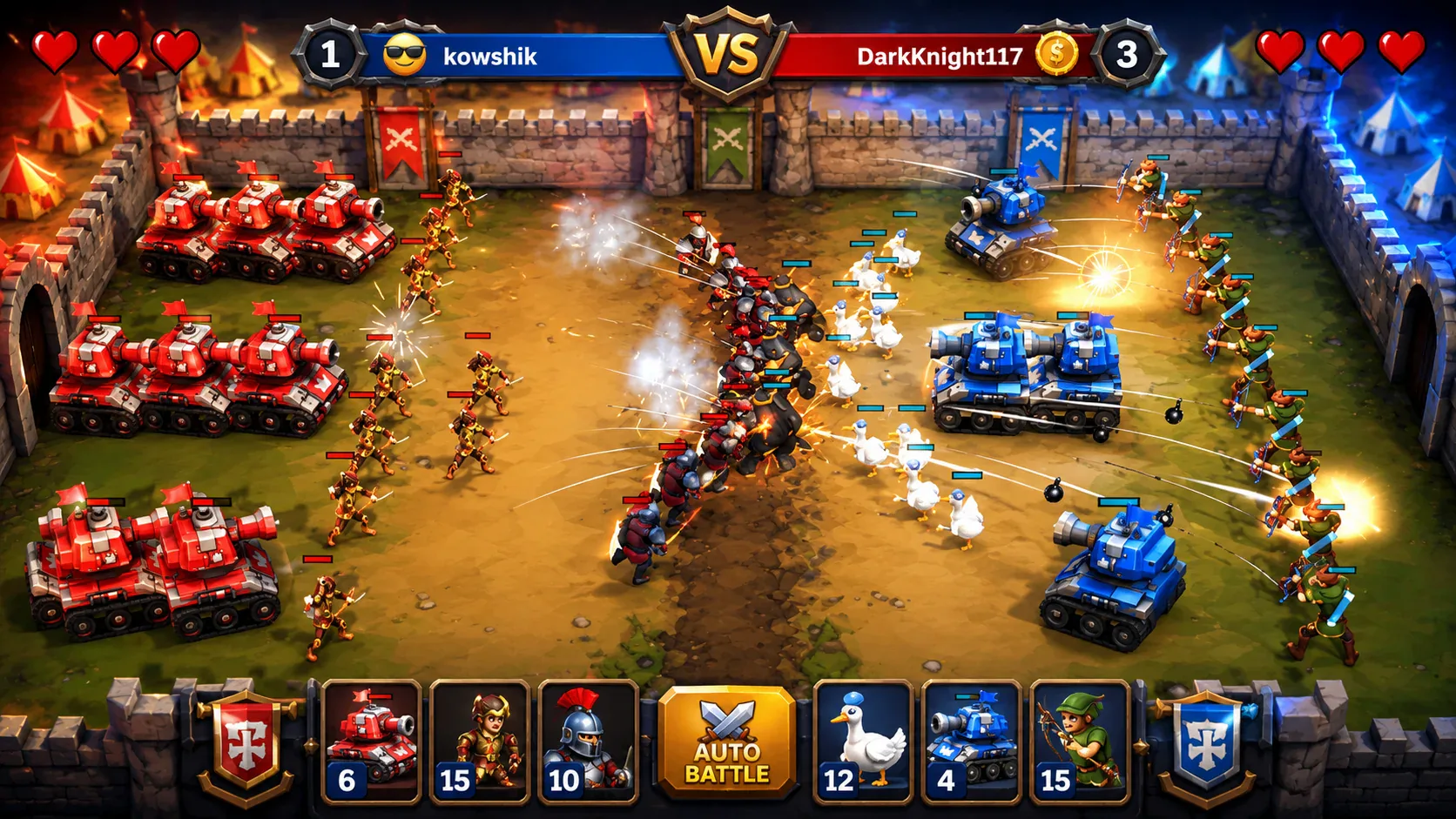
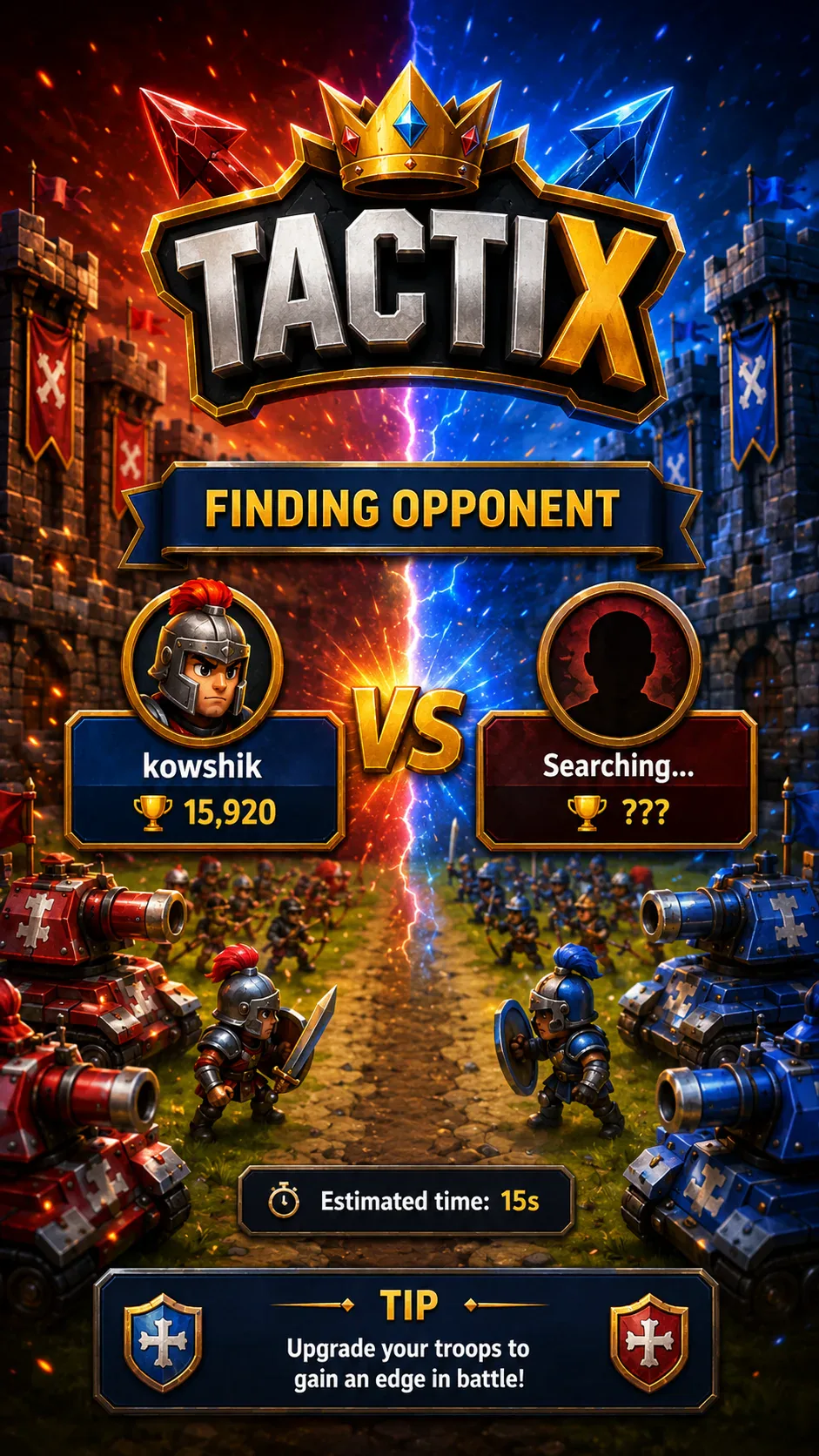
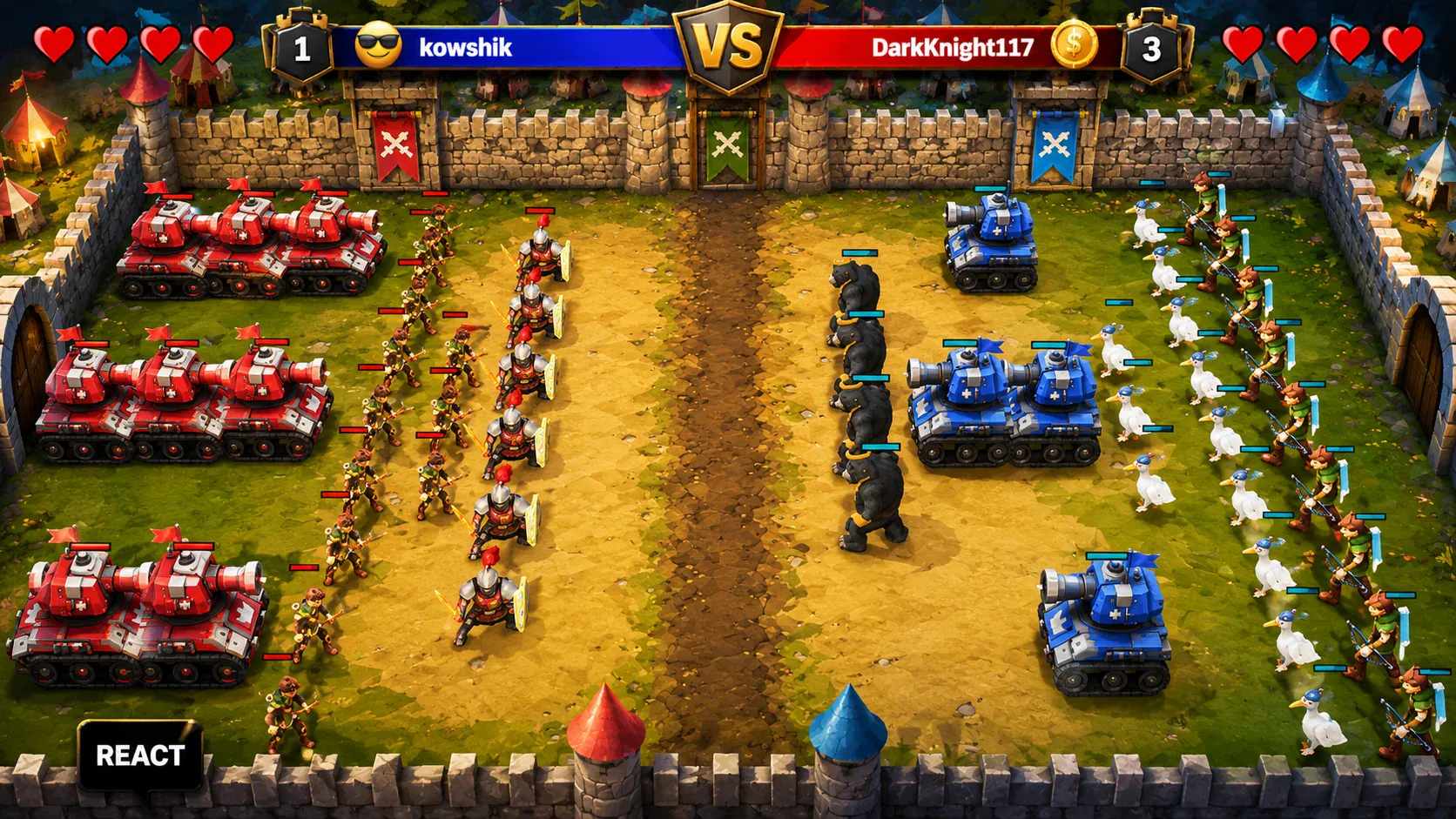
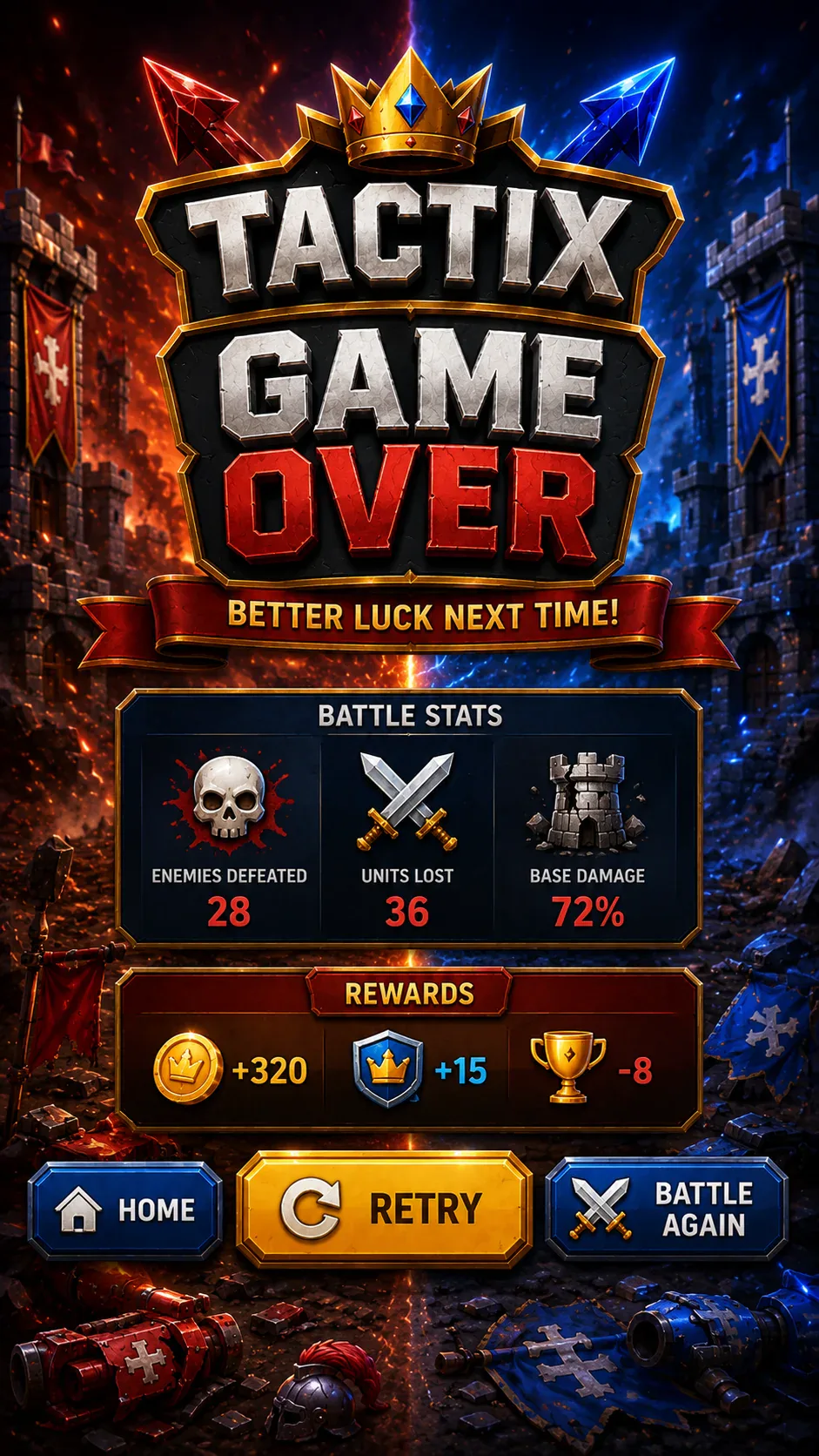
TacTix is a tactical auto-battler where players draft cards to dynamically build their army, merge duplicate units to upgrade their tier, and strategically place them in formation to fight automatically. It was designed to provide highly competitive, quick-session mobile gameplay with rich particle feedback and high visual responsiveness.
ENGAGEMENT MODEL4 Months
GAME ENGINEUnity 3D (URP)
GENREStrategic Card Draft Auto-Battler
ART STYLELow-Poly Stylized 3D
TARGET PLATFORMSAndroid, iOS
GAMEPLAY PREVIEW
ENGINEERING ROADBLOCKS
TECHNICAL CHALLENGES
The project was commissioned to create a competitive mobile strategy experience using optimized rendering pipelines and staggered spawning routines.
CHALLENGE LOG #1
CHALLENGE LOG #2

1
Performance Stutters during Round Rebuilding
Instantiating and initializing a large number of stylized 3D units, loading their assets, and binding skin weights on the same frame caused severe CPU spikes (up to 560ms), creating visible micro-freezes every time the board rebuilt between rounds.
2
Memory Bloat & Garbage Collection Hitches
Frequent instantiation and destruction of units, projectiles, and particle VFX led to high memory allocation overhead, triggering automatic Garbage Collection sweeps that caused gameplay hitches during active combat.
3
Dynamic Asset and Live Update Management
The need to keep the initial download size on the Google Play Store minimal while supporting the modular addition of new arenas, environments, and units as players progress.
CUBESTAX ARCHITECTURE
ENGINEERED SOLUTIONS
1
Architecture
Load-Balanced Staggered Spawning: Implemented a coroutine-based staggered activation mechanism in the BattleManager. By distributing the CPU initialization and animation binding cost of units across consecutive frames during round setup, frame spikes were reduced to under 16ms.
2
Gameplay
Context-Aware Addressables Object Pooling: Refined the BattleObjectPool system to cache and recycle units, projectiles, and VFX. Fixed a critical pooling issue where combat units with child particle systems were misidentified as temporary VFX and self-recycled prematurely, ensuring robust visual state synchronization.
3
Optimization
Optimized Remote Asset Hosting: Integrated Unity Addressables with remote catalogs hosted on Firebase Hosting, allowing the game to download modular packages (like new Arena environments) dynamically based on the player’s progress and rank.
4
Art Pipeline
Low-Poly Stylized Rigging: Crafted and animated an elegant low-poly stylized universe with custom lightweight shader passes to reduce GPU draw stress on older mobile devices.
VERIFIED SOLUTION #1
VERIFIED SOLUTION #2
EXECUTION TIMELINE
DEVELOPMENT PIPELINE
Structured milestone sprints from core game loop validation to production-ready multi-platform release.
Discovery & Prototyping (Phase 1)
Setting up the core card drafting UI, unit behavior state machine, and battle grid layout.
Core Mechanics & VFX Integration (Phase 2)
Integrating Low-Poly stylized 3D models, implementing unique unit abilities, custom spawn animation sequences, and responsive particle effects.
Profiling, Optimization & Play Store Release (Phase 3)
Performing deep mobile CPU/GPU profiling, load-balancing unit activations, setting up dynamic catalogs, and publishing to early access closed testing.
MEASURABLE METRICS
RESULTS & DELIVERY IMPACT
60 FPS Target
+45% Stability
Setup CPU Spikes
95%+ Spike Reduction
GC Allocations
100% Smooth Play