
TECHNICAL BRIEF
PROJECT INTRODUCTION
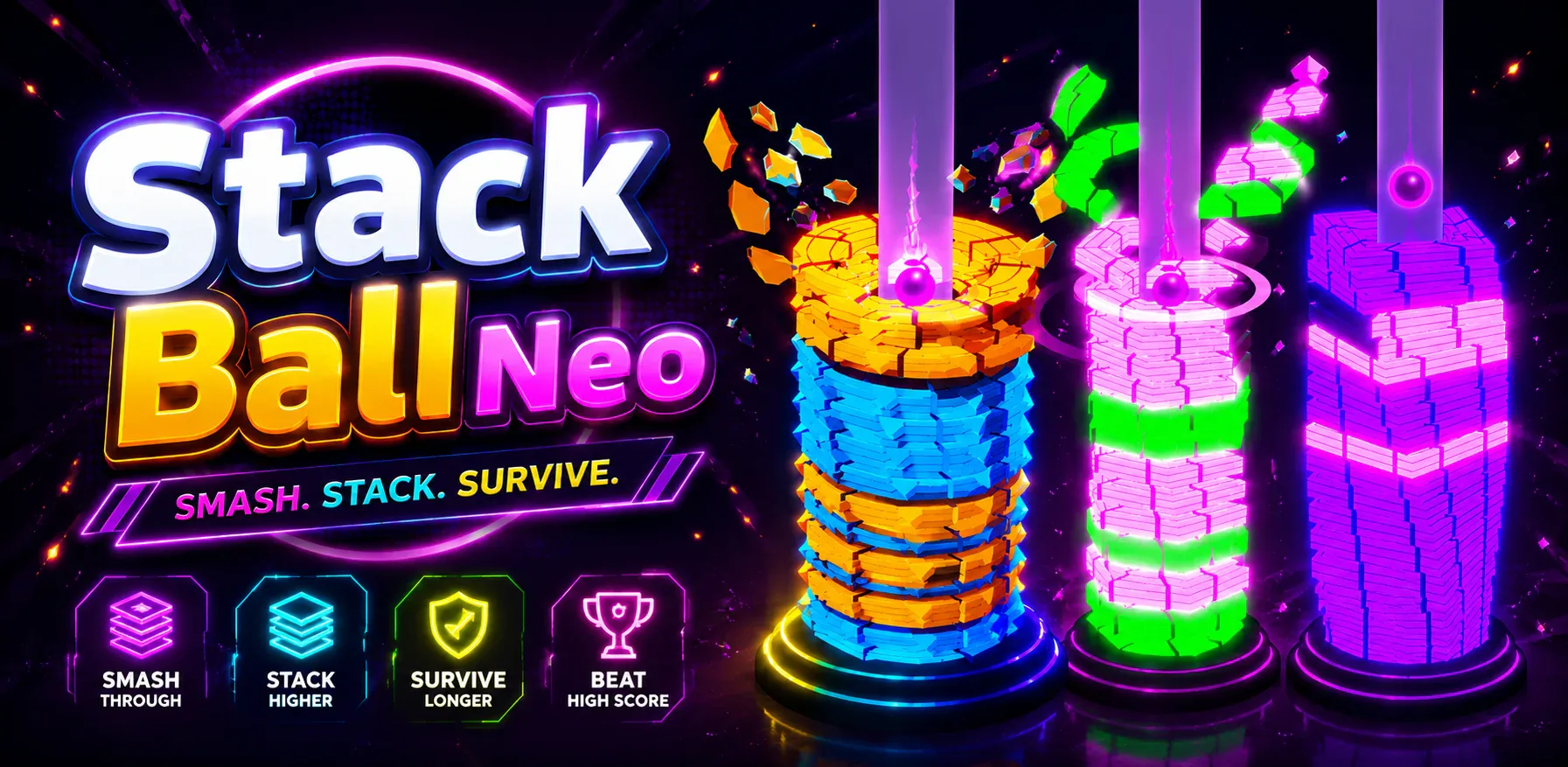
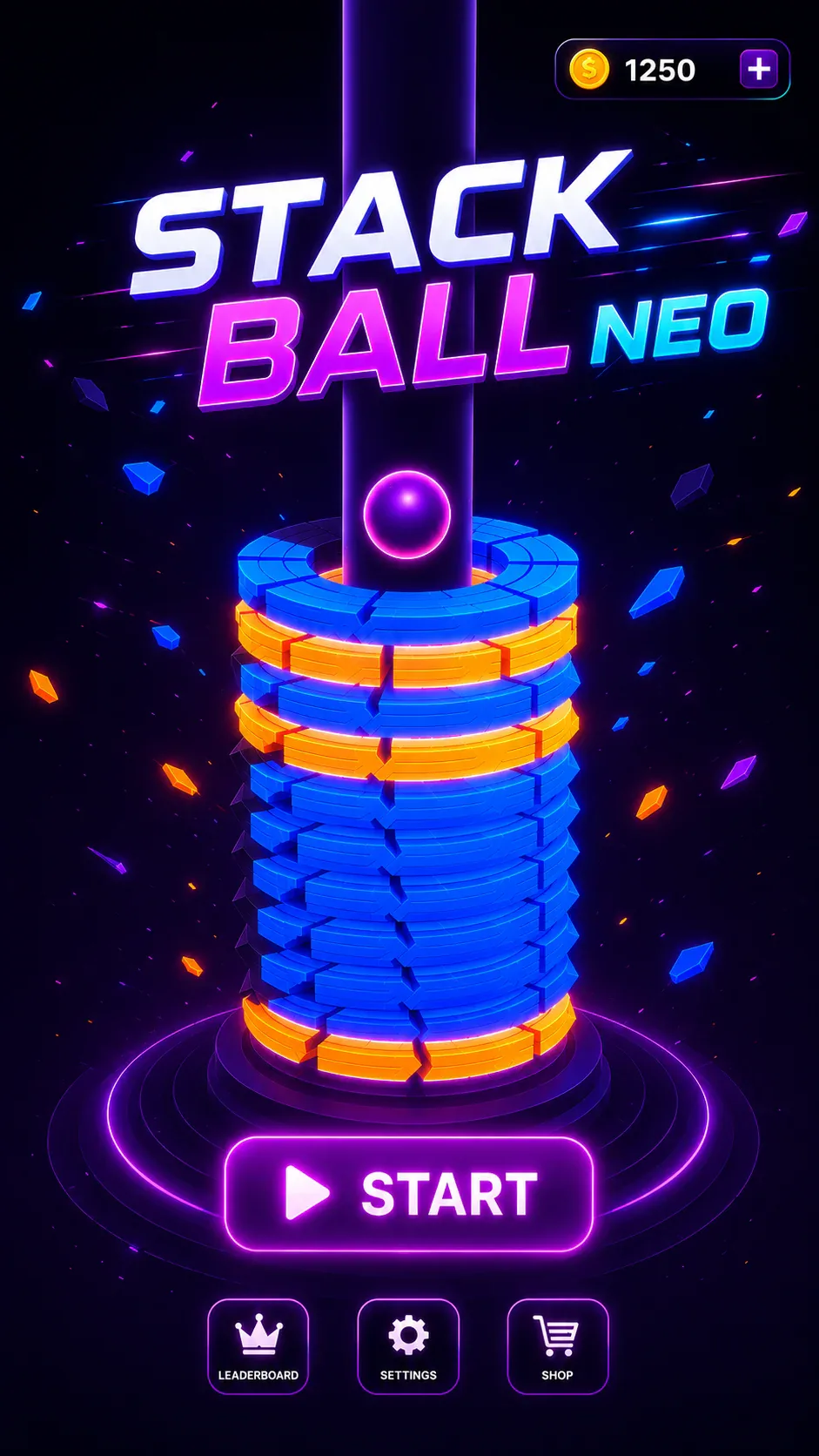
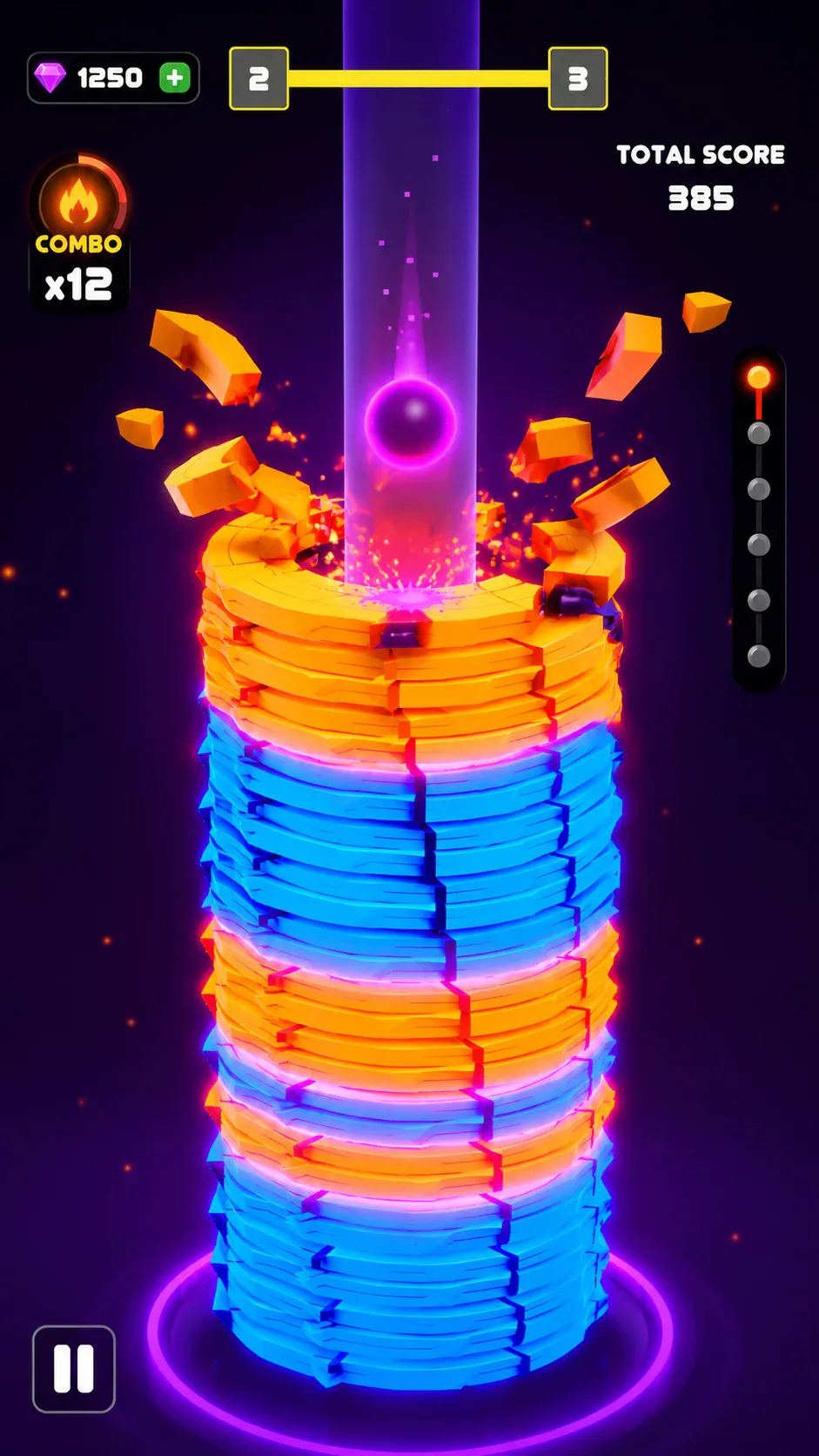
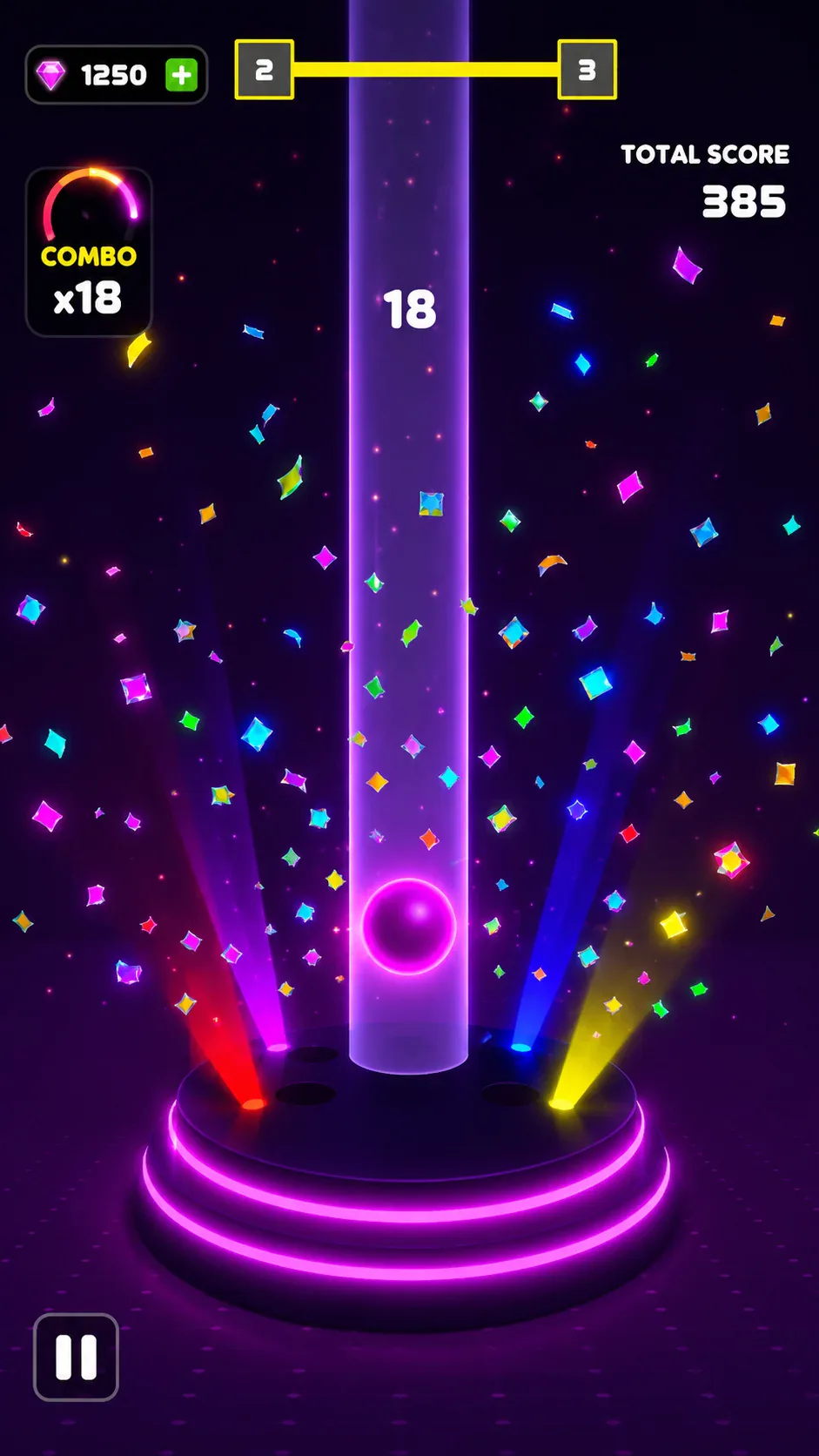
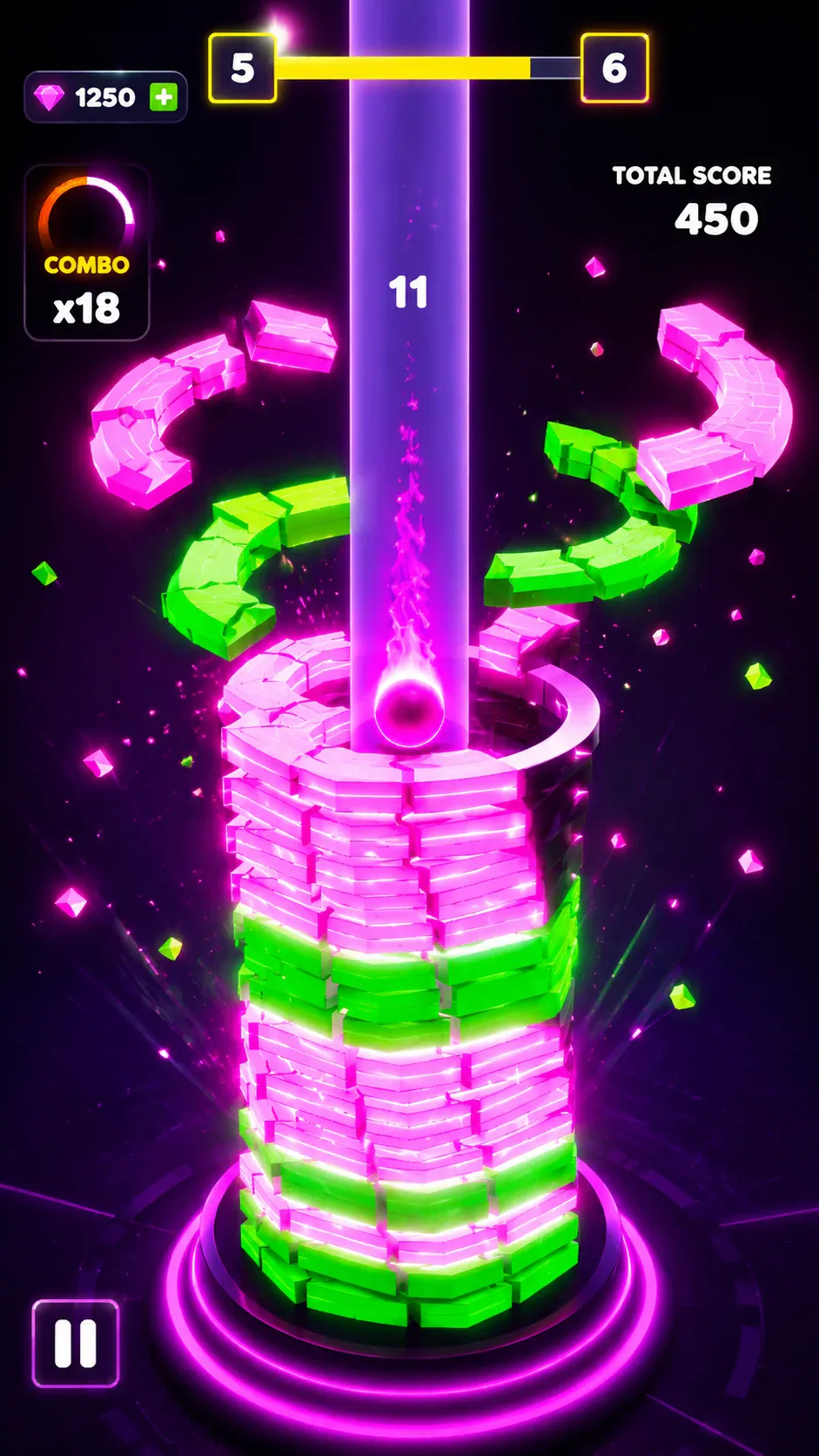
Neon Stack Ball is a fast-paced, hyper-casual game where players steer a bouncing ball through a rotating tower of colorful helix segments. The objective is to press and hold the screen to smash through sections of the platform and reach the final zone, while avoiding the contrasting black 'obstacle' segments. Breaking consecutive platforms fills up an energy meter, triggering a temporary 'fire mode' that grants invincibility and allows players to smash through anything in their path.
ENGAGEMENT MODEL3 Months
GAME ENGINEUnity 3D (URP)
GENRE3D Arcade Hyper-Casual / Action Puzzle
ART STYLEStylized 3D, Neon Glow, Minimalist
TARGET PLATFORMSAndroid, iOS
GAMEPLAY PREVIEW
ENGINEERING ROADBLOCKS
TECHNICAL CHALLENGES
The project was commissioned to establish a high-end mobile template demonstrating URP post-processing neon effects and high-efficiency physics bypasses.
CHALLENGE LOG #1
CHALLENGE LOG #2
1
CPU Spikes & GC Pressure During Dynamic Mesh Shattering
Instantly breaking a tower platform into several individual physics-enabled shards caused significant CPU spikes and garbage collection (GC) frame drops on low-end mobile devices, especially when players triggered rapid multi-smash combos.
2
Ad Integration Latency & Stalls
Fetching and displaying full-screen ads often introduced visual stutter during gameplay. Additionally, handling failures gracefully (such as expired ad requests, network dropouts, and rate limits) without interrupting the user experience was critical.
3
High-Score Synchronization & Anti-Cheat Validation
Creating a reliable leaderboard system that allows users to compete globally while preventing cheating through local storage tampering, and ensuring automatic background syncing when offline play transitions back to online.
CUBESTAX ARCHITECTURE
ENGINEERED SOLUTIONS
1
Architecture
Decoupled Shatter Physics & Fragment Pools: Optimized shattering by immediately detaching broken fragments from the main rotating platform parent object, applying impulse forces using StackPartController.Shatter without hierarchy traversal, and immediately starting an asynchronous coroutine that destroys the fragments after 1 second. Particle effects and trails are fully pre-allocated and pooled to prevent runtime memory allocations.
2
Gameplay
Resilient, Thread-Safe AdMob Facade Architecture: Designed a modular, partial-class AdMobManager that implements proactive pre-loading, automatic exponential backoff retry policies (2s up to 60s cap), and real-time internet connectivity checking via a dedicated NetworkMonitor. A thread-safe queue processes Google SDK events on Unity's main thread, and a mutual-exclusion flag locks simultaneous full-screen ad requests to prevent overlapping impressions.
3
Optimization
Secure Anonymous Login & PlayFab Cloud Synchronization: Leveraged PlayFab Client SDK to authenticate players using their unique device identifier (SystemInfo.deviceUniqueIdentifier), falling back to a persistent GUID if needed. Scores are synced periodically via server-side verification, ensuring that the global leaderboard is secure and loads dynamically inside a smooth-scrolling UI container.
4
Art Pipeline
Neon Bloom Post-Processing: Tuned Unity URP Bloom and Color Grading filters to generate high-contrast glowing profiles without overloading GPU rendering margins.
VERIFIED SOLUTION #1
VERIFIED SOLUTION #2
EXECUTION TIMELINE
DEVELOPMENT PIPELINE
Structured milestone sprints from core game loop validation to production-ready multi-platform release.
Discovery & Aesthetic Prototyping (Weeks 1-3)
Configured the Universal Render Pipeline (URP), set up post-processing profiles (bloom, color grading), and designed the basic ball physics and player control loop.
Procedural Tower Generation & Shatter Mechanics (Weeks 4-6)
Developed the LevelSpawner to procedurally generate towers with dynamic visual themes, random color templates, and configured the physics-based shattering and cleanups.
SDK Integration & Services (Weeks 7-9)
Integrated PlayFab for anonymous authentication and leaderboard syncing, and implemented the full AdMobManager architecture for banner, interstitial, and rewarded ads.
Optimization, Polish & QA (Weeks 10-12)
Profiled mobile builds to optimize draw calls and shader complexity, refined the vibration/haptic feedback systems, and verified compliance with App Store and Google Play guidelines.
MEASURABLE METRICS
RESULTS & DELIVERY IMPACT
60 FPS Gameplay
Bypassed hierarchy physics calls
CPU Shatter Overhead
Decoupled fragment cleanup pools
Ad fill rate accuracy
Proactive preload & retries
Sync reliability status
PlayFab background sync hooks
KNOWLEDGE BASE